
Thalassotherapy skincare — that is, using seawater and marine-derived ingredients as a foundation for skin health — has moved well beyond seaside spa menus. The minerals found in seawater are genuinely compatible with skin chemistry in a way that makes them worth understanding properly before you dismiss them as trend-driven fluff.
Why Ocean Minerals Work So Well With Your Skin
Disclosure: This article contains affiliate links. If you purchase through these links, we may earn a small commission at no extra cost to you.
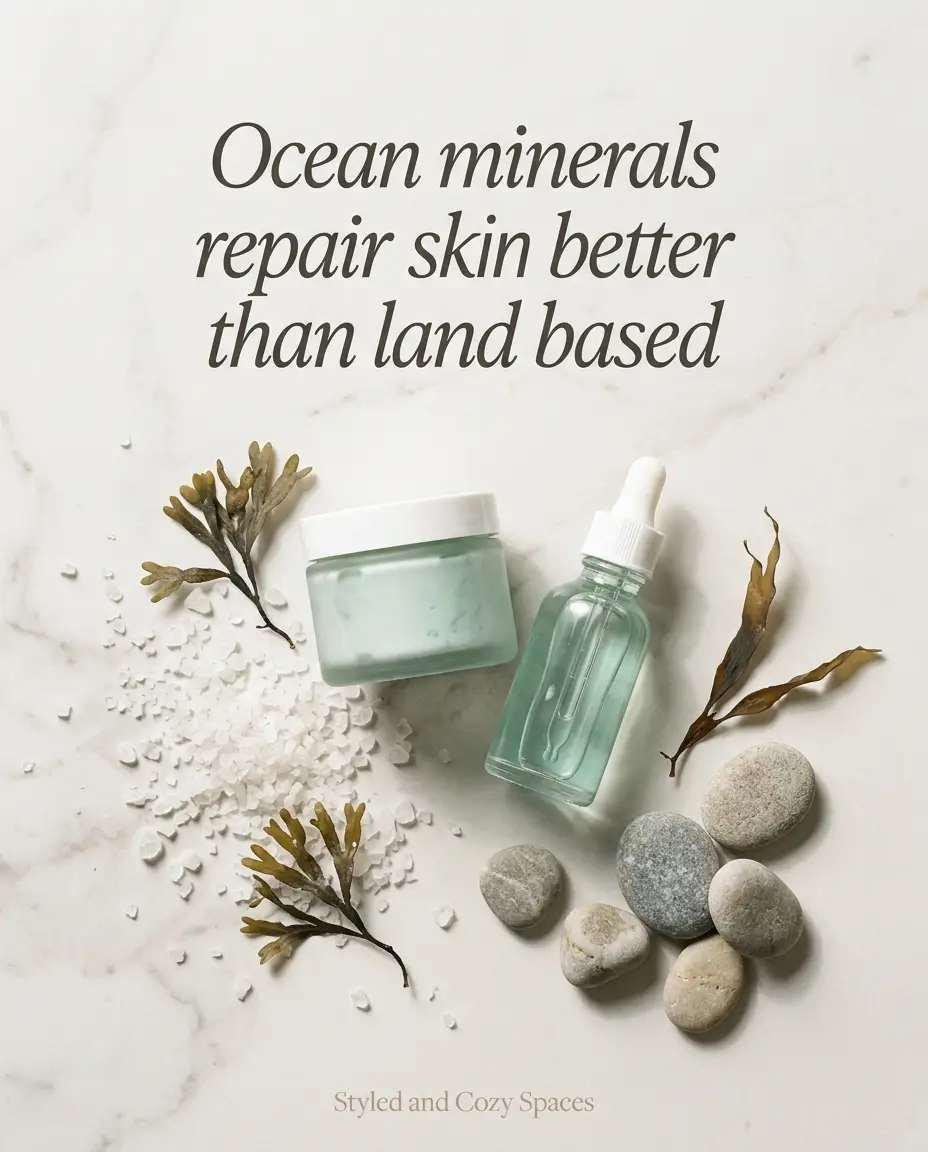
Here’s something worth knowing: your blood plasma and the ocean share a remarkably similar mineral profile. This isn’t coincidence — it’s biology. Magnesium, calcium, potassium, and trace elements found in seawater are already part of how your skin functions, which is why marine-derived minerals tend to be better recognised and absorbed by skin than many land-based alternatives.
Magnesium supports cellular repair and helps calm reactive or stressed skin. Calcium contributes to barrier integrity and skin renewal. Potassium helps maintain water balance within skin cells. These aren’t exotic additives — they’re building blocks your skin is already trying to use. Marine formulations simply deliver them in a form the skin can work with efficiently.
What makes the best marine ingredients particularly interesting is how they’ve evolved. Seaweed and algae have developed protective compounds in response to extreme conditions: intense UV exposure, fluctuating salinity, crushing pressure. Brown algae, for example, produces phlorotannins — polyphenols that work against the enzymatic process that breaks down collagen, while also neutralising free radicals. These are functional compounds that have been stress-tested by the ocean, not a laboratory.
What Marine Skincare Can Actually Address
One of the reasons thalassotherapy skincare has grown so steadily is that it tends to address multiple concerns without causing the irritation that harsher chemical actives can bring. If you’ve ever found that a strong exfoliant or brightening treatment leaves your skin grumpy for days, marine actives are worth considering as an alternative approach.
For hyperpigmentation, fucoidan — a compound from brown seaweed — inhibits the enzyme responsible for melanin overproduction. It works gently, which makes it particularly useful for anyone dealing with melasma or post-inflammatory marks who finds kojic acid or similar ingredients too sensitising.
For hydration, marine-derived hyaluronans bind significant amounts of moisture but tend to have a lower molecular weight than standard sodium hyaluronate, which means they can penetrate more effectively and deliver visible plumping without sitting solely on the surface.
For breakout-prone skin, trace elements like zinc and selenium found in therapeutic sea salts have natural antimicrobial properties that address blemish-forming bacteria without stripping the skin entirely.
It’s also worth noting that marine sourcing has a sustainability argument in its favour. Seaweed and algae require no fresh water, no land, no fertilisers. Responsibly harvested or rope-cultivated marine ingredients represent a genuinely lower-impact model than many land-based botanicals.
Building a Marine Skincare Routine at Home
You don’t need a coastal spa to bring thalassotherapy into your routine. The most accessible starting point is a mineral-rich sea salt soak — two to three times a week for around twenty minutes allows adequate absorption of magnesium and other minerals through the skin. Exfoliation before soaking matters too, because removing the build-up of dead skin cells genuinely helps the minerals that follow absorb more effectively.
Beyond bathing, layering marine-based products into your daily skincare is where consistency pays off. A seaweed-extract cleanser, a hydrating serum with marine hyaluronans, and a moisturiser featuring algae or kelp extract used regularly will build results more reliably than an occasional intensive treatment.
If you want a straightforward way to start, the Organic Thalasso Skincare Set from Ecosmetics brings together marine-based formulations in one place, which is useful when you’re trying to assess whether the approach suits your skin without investing in individual products across multiple brands. It’s a sensible option for anyone curious about organic thalassotherapy who wants to try a cohesive routine rather than piecing one together.
When choosing any marine skincare, look for products that specify their source ingredients clearly — the exact type of algae or seaweed, and ideally where it comes from. Third-party testing for heavy metals and microbiological safety is particularly worth checking for ocean-sourced ingredients, since the quality of the source water genuinely affects what ends up on your skin.
The simplest takeaway here is this: if your skin has felt reactive, depleted, or dull without an obvious cause, restoring its mineral balance through ocean-derived ingredients is a gentle, evidence-backed place to start — and one that tends to work alongside your existing routine rather than disrupting it.
Frequently Asked Questions
Is thalassotherapy skincare suitable for sensitive or reactive skin?
Marine actives are generally considered gentler than many chemical alternatives, which is why they’re often recommended for sensitive skin types. Ingredients like fucoidan and kelp extract have anti-inflammatory properties that calm rather than aggravate reactivity. That said, if you have a known allergy to shellfish or iodine, it’s worth checking specific ingredient lists before using seaweed-heavy formulations.
How long does it realistically take to see results from marine skincare?
Marine skincare tends to work cumulatively rather than dramatically overnight. Most people who use marine-based products consistently — particularly hydrating serums and regular mineral soaks — notice improved skin texture and hydration within four to six weeks. Concerns like hyperpigmentation typically take longer to shift, closer to eight to twelve weeks of consistent use.
What’s the difference between sea salt skincare and seaweed skincare?
Sea salt products primarily deliver minerals — magnesium, calcium, potassium — and work particularly well in soaks or exfoliants to remineralise and prepare the skin. Seaweed and algae products contain these minerals too, but also include active compounds like phlorotannins, fucoidan, and sulfated polysaccharides that target specific concerns such as collagen support, brightening, and barrier repair. A well-rounded thalassotherapy routine ideally incorporates both.
How We Research
Every recommendation on Styled & Cozy Spaces is based on ingredient analysis, UK retail pricing across major stockists (Boots, LookFantastic, Space NK, Amazon UK), and independent UK customer reviews. We do not accept payment for recommendations. When we include affiliate links, the commission does not influence which products we select.



Leave a Reply