
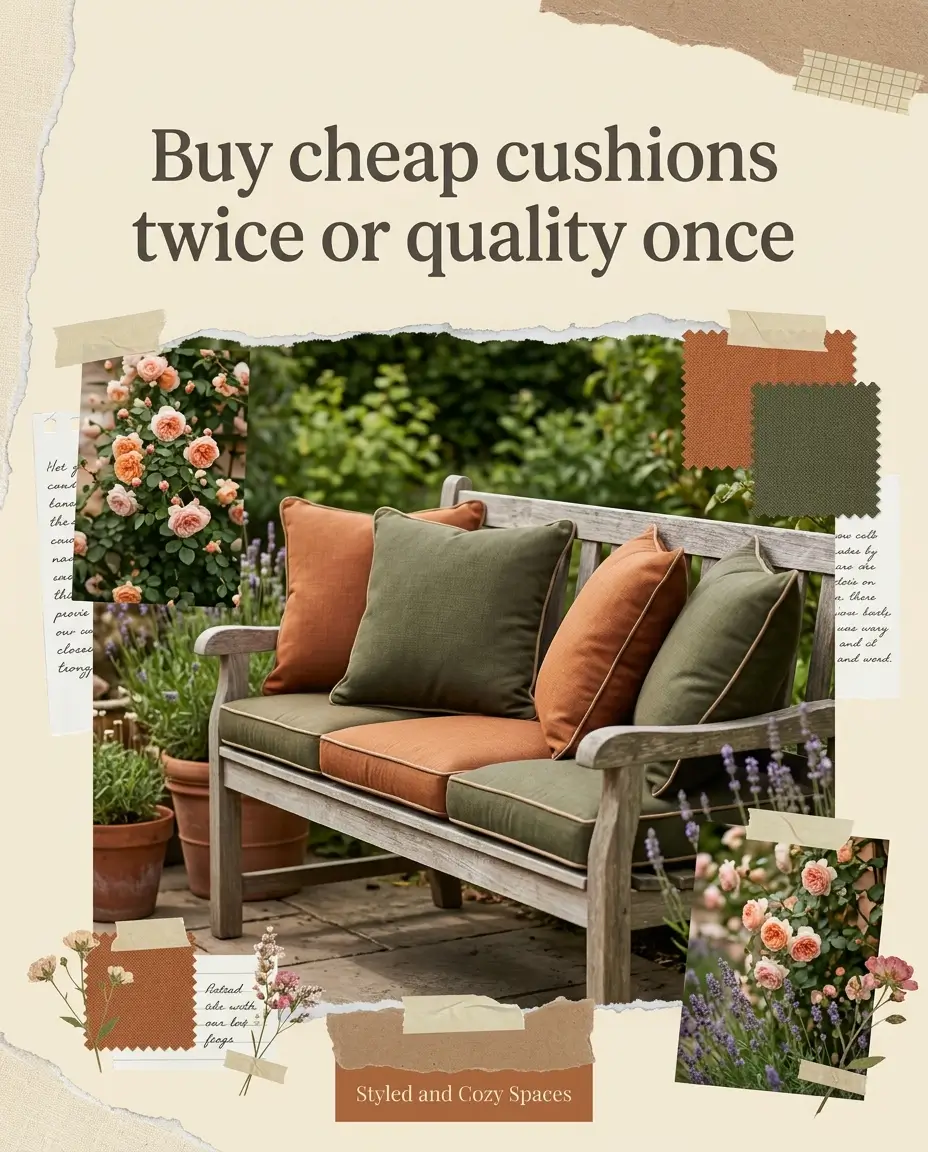
The fabric your outdoor cushion is made from determines almost everything: how long the colour lasts, whether moisture works its way inside, and whether it still feels good to sit on after two summers of use. Getting this right once is far more satisfying — and more economical — than replacing cheaper versions every year.
What Makes an Outdoor Cushion Fabric Actually Work
This article contains affiliate links. If you make a purchase through them, we may earn a small commission at no extra cost to you.
There’s an important distinction that separates outdoor fabrics worth buying from those that just claim to be weather-resistant. Solution-dyed fabrics have colour infused throughout the fibre during production, rather than applied to the surface afterwards. That difference matters enormously: when the surface wears or fades, the colour underneath remains consistent because it runs all the way through. Both solution-dyed acrylic and olefin (made from polypropylene) use this method, which is why they outperform standard polyester cushions in terms of colorfastness.
Acrylic fabrics — the kind used in premium outdoor ranges — offer a soft, cotton-like feel that’s noticeably more comfortable than the slightly firmer texture of olefin. In terms of lifespan, quality solution-dyed acrylic typically holds up well for five to ten years with reasonable care, while olefin tends to perform well for three to five years. For a garden cushion you’re planning to keep long-term, that difference is worth factoring into the price per season.
Olefin does have one meaningful edge: it’s naturally hydrophobic, so liquids sit on the surface rather than soaking in. This makes it particularly good for poolside or heavily rain-exposed spots where quick drying is the priority. In a typical UK garden — where you’re dealing with a mix of drizzle, occasional sunshine, and humidity — either fabric works well, but acrylic’s superior softness and longer colour retention tend to make it the more satisfying choice.
The Maintenance That Actually Makes a Difference
The reason quality cushions fail prematurely isn’t usually the fabric — it’s a lack of simple, consistent care. Brushing off debris before it has time to work into the weave, spot-cleaning with mild soap and water after spills, and applying a fabric protectant spray once a season will extend the life of almost any outdoor cushion significantly. Solution-dyed acrylic benefits from that annual reproofing treatment to keep its water-repellent finish performing well; olefin generally needs only gentle cleaning to maintain its natural resistance.
Bringing cushions inside during prolonged wet weather or winter storage isn’t always practical, but even storing them in a breathable cover makes a real difference. Sealed plastic bags trap moisture and encourage mildew; a loose cotton or mesh cover lets air circulate while keeping the worst of the damp out.
A Cushion Worth Investing In
If you’re looking for something that genuinely holds up rather than just looks good on a product page, the Gardenistauk Flora cushion is worth a proper look. It’s designed specifically for outdoor use, with a considered approach to both the fabric choice and the construction. The design is botanical and textured — the kind of thing that looks intentional in a garden rather than like a default filler piece.
It suits someone who’s put thought into their outdoor space and wants cushions that actually complement it rather than having to be hidden away at the first sign of clouds. Realistic expectations here: no cushion is completely indestructible, and storing it properly during winter will always extend its life. But the quality of construction puts it well above the kind of cushion you’d replace after one season.
The honest argument for spending a little more on outdoor cushions is a simple one: a cheaper cushion bought twice costs more than a better cushion bought once. It also takes up mental energy — noticing the fading, putting off replacing them, and eventually making the same choice again under mild annoyance. Choosing well from the start quietly removes all of that.
Start with the fabric specification when you’re comparing options. If the product description doesn’t mention whether it’s solution-dyed, that’s usually a sign it isn’t — and that’s the detail that matters most for long-term colour and durability. One good cushion in the right fabric, looked after properly, will serve a garden far better than three mediocre ones.
Frequently Asked Questions
Can outdoor cushions be left outside in the rain, or do they need to come inside?
Quality outdoor cushions made from solution-dyed acrylic or olefin fabrics are designed to handle rain exposure, but leaving them out constantly in wet conditions will shorten their lifespan. Bringing them under cover during prolonged wet spells or overnight helps significantly — or at minimum, use a breathable cover rather than a sealed plastic bag, which traps moisture and encourages mildew.
How often does a good outdoor cushion actually need reproofing?
For solution-dyed acrylic fabrics, a fabric protectant spray applied once a season — typically at the start of spring — is enough to maintain the water-repellent finish. Olefin cushions are naturally hydrophobic and generally need less intervention; gentle cleaning with mild soap and water is usually sufficient to keep them performing well.
Is there a noticeable difference in comfort between olefin and acrylic outdoor cushions?
Yes, and it’s one of the more practical distinctions between the two. Premium acrylic fabrics have a soft, cotton-like feel that’s much closer to an indoor cushion, while olefin tends to feel firmer to the touch. If you’re planning to actually sit on the cushions for extended periods rather than purely using them for decoration, the comfort difference is worth factoring into your decision.
How We Research
Every recommendation on Styled & Cozy Spaces is based on ingredient analysis, UK retail pricing across major stockists (Boots, LookFantastic, Space NK, Amazon UK), and independent UK customer reviews. We do not accept payment for recommendations. When we include affiliate links, the commission does not influence which products we select.



Leave a Reply