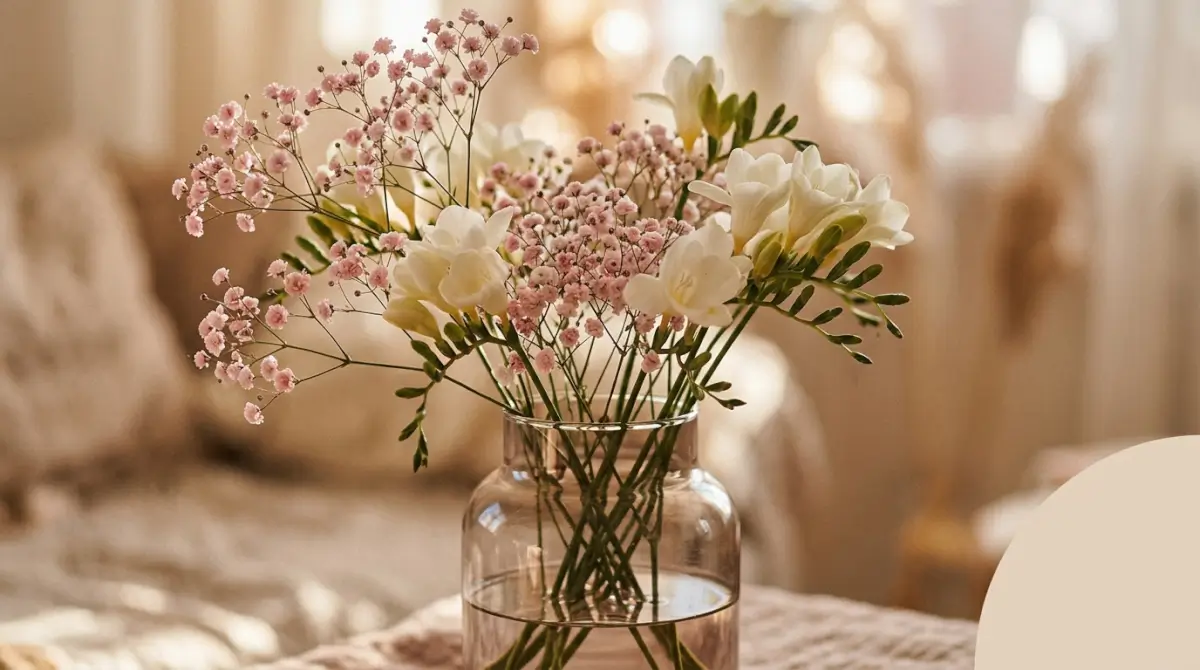
That said, it’s not the right pick if you want bold, high-impact drama or a single statement flower. This is a soft, considered arrangement — understated rather than showy, fragrant rather than loud. If you tend towards maximalist interiors or bright color palettes, you may find the pale pink palette a little quiet.
At a glance
- Centers on pale pink lilies and freesias
- Freesias release a sweet, subtle fragrance
- Lilies unfurl gradually over several days
Affiliate disclosure: This article contains an affiliate link. If you make a purchase, we may earn a small commission at no extra cost to you.
What makes this pairing work
Lilies and freesias are often paired in floistry because they balance each other rather than compete. The lilies do the structural heavy lifting — their large, sculptural petals give the arrangement real presence without looking fussy. Because they open gradually over several days rather than all at once, the bouquet evolves as the week goes on. You get changing beauty rather than a single moment of peak prettiness followed by decline.
Freesias work differently. They grow in clusters along tall stems, which creates gentle movement and visual texture. Where lilies draw the eye, freesias soften the edges — and crucially, they add scent. It’s sweet but not overwhelming, the kind of fragrance that you notice when you walk into the room rather than one that follows you out of it. That detail matters more than it might seem: it shifts the bouquet from something purely decorative into something you actually experience throughout the day.
The soft pink palette across both flowers creates visual coherence without making the arrangement feel flat or one-dimensional.
How to keep it looking its best
The first hour after unboxing is the most important. Unwrap the stems, trim each one diagonally — roughly half an inch — under running water, and remove any foliage that would sit below the waterline in your vase. Submerged leaves rot quickly and cloud the water with bacteria, which shortens flower life noticeably. It takes two minutes and makes a real difference.
Placement matters almost as much as care. A mantelpiece above a radiator or a sunny windowsill will stress the petals faster than you’d expect. A hall table or side dresser in cool, indirect natural light is the sweet spot. After that, it’s a simple rhythm: refresh the water every one to two days, retrim the stems every two to three days with a sharp knife or scissors, and avoid cramping the stems tightly together — flowers need a little breathing room to stay fresh and to show their individual shape.
One small arranging trick worth knowing: cut roughly a fifth of the stems slightly shorter than the rest. It creates natural depth and movement in the vase, and the pale pink tones read more beautifully with that layered variation than when everything sits at the same height.
Who it suits — and who it’s for
The Cherry Blossom Luxe bouquet suits anyone drawn to soft color palettes, natural florals, and subtle fragrance — whether that’s a gift or a treat for yourself. It’s a particularly good choice for milestone moments that call for something thoughtful rather than celebratory: a new job, a recovery from something difficult, or simply marking the shift into a new season. The scent carries that quiet sense of renewal without tipping into saccharine.
For self-gifting, it works well if you already keep fresh flowers at home — on a desk, a bathroom shelf, or a kitchen windowsill — and want an arrangement that rewards the small effort of proper care. It sits comfortably alongside a luxury candle habit or a Japanese-influenced aesthetic; it would feel out of place in a home that gravitates towards bold, maximalist styling.
As a gift, think of it for the person who already has most things but values considered, slightly romantic choices — someone whose taste you know well enough to choose for.
If you want flowers that earn their place through both beauty and longevity rather than making a single dramatic entrance, Cherry Blossom Luxe is worth it.
Frequently Asked Questions
How long will the Cherry Blossom Luxe bouquet last in a vase?
With proper care — fresh water every one to two days, stems retrimmed every two to three days, and placement away from heat and direct sunlight — you can expect the arrangement to look its best for the better part of a week. Lilies open gradually rather than all at once, which extends the bouquet’s lifespan compared with flowers that peak immediately on arrival.
Is Cherry Blossom Luxe a good option for someone with fragrance sensitivities?
The freesia scent is described as sweet and subtle rather than intense — present when you enter the room, but not overpowering in an enclosed space. If you or the recipient are sensitive to strong floral fragrances, it’s worth knowing it won’t fill an entire home the way lilies in some other varieties can. For most people, the level is pleasant and ambient rather than headache-inducing.
What’s the difference between choosing a fresh bouquet like this and a dried or preserved flower arrangement?
Fresh arrangements like Cherry Blossom Luxe offer fragrance and that evolving, living quality — lilies opening day by day — that preserved or dried flowers simply can’t replicate. The trade-off is that they require regular care and won’t last longer than a couple of weeks. Dried or preserved arrangements suit people who want a low-maintenance, long-term display; fresh flowers suit people who value the sensory experience and don’t mind the upkeep.
How We Research
Every recommendation on Styled & Cozy Spaces is based on product specifications, retail pricing across major stockists and independent customer reviews. We do not accept payment for recommendations. When we include affiliate links, the commission does not influence which products we select.
This article was created with AI assistance.