Why the Pairing Principle Matters More Than the Price
Affiliate disclosure: This article contains one affiliate link. If you make a purchase, we may earn a small commission at no extra cost to you.
There’s a reason a well-chosen wine and food gift feels more personal than a standard hamper stuffed with items that have nothing to say to each other. When the elements are chosen to work together — a crisp Sauvignon Blanc alongside smoked fish crackers, a light red with dark chocolate — you’re not just giving treats. You’re giving the recipient an invitation to an experience she can actually follow.
This is what separates a gourmet gift box from a glorified carrier bag of biscuits. The curation signals that someone has done the work of finding things that belong together, not just things that are expensive. Provenance helps here too: single-origin chocolate, small-batch preserves, properly roasted nuts. These details don’t announce themselves loudly, but the recipient feels the thought behind them, even if she can’t quite articulate why.
How to Think About Wine and Food Pairings Without Overcomplicating It
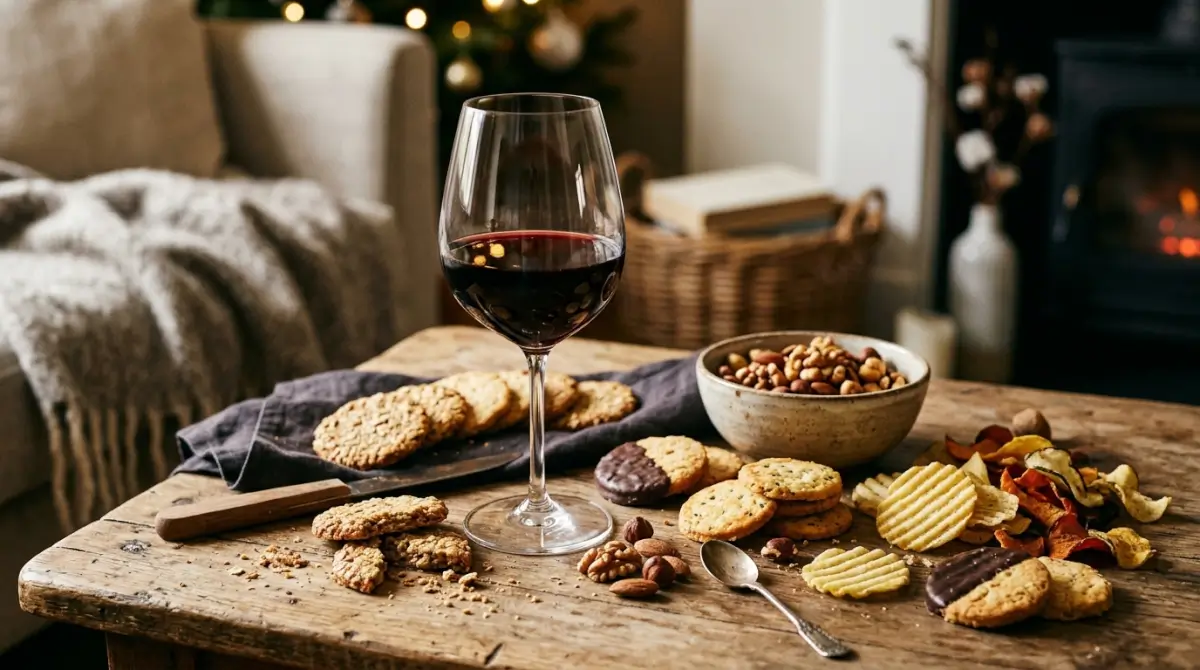
If you’re putting together your own box or want to extend the gifted one into a proper evening, the one principle worth remembering is weight matching. Delicate dishes — sole, soft cheeses, light crackers — want wines that won’t overpower them. Robust flavours — aged cheddar, dark chocolate, cured meat — can handle something fuller-bodied with a bit of tannin.
For a cheese board specifically, the trick is to aim for harmony across the spread rather than perfection with every single piece. A medium-bodied red or a structured white sits comfortably alongside a mix of soft and hard cheeses. Pinot Grigio or a dry rosé flatters Brie and Camembert without a fight. Mature cheddar or Gruyère takes well to a fuller red. You don’t need to memorise a chart — just note whether what you’re eating is delicate or robust, and match the weight of the wine to that.
This is exactly the kind of knowledge that a thoughtful gift box passes on implicitly. When the pairing is already done for the recipient, she gets not just the food and wine but the confidence to enjoy them properly.
Choosing the Right Box for the Occasion
The occasion shapes everything — not just what goes inside, but how much of it, and how it’s presented. A birthday warrants something celebratory and indulgent. A professional thank-you needs polish without presumption: quality over quantity, elegant restraint over abundance. For a difficult moment — a bereavement, an illness — simplicity is the kindest choice. Herbal teas, gentle biscuits, unfussy comfort rather than anything that reads as festive.
For intimate celebrations, a smaller, paired selection tends to land better than a large hamper. One box, thoughtfully assembled, communicates something a jumble of miscellaneous items simply doesn’t. It says: I’ve considered your evening. That’s worth more than volume.
One gift box that’s worth considering for exactly this kind of occasion is the Ridgeview Blanc de Blancs English Sparkling Wine and food gift box. It pairs an award-winning English sparkling wine with a curated selection of accompaniments that have been chosen to complement rather than compete. English sparkling wine suits those who want something genuinely special without defaulting to Champagne — it’s not a lesser choice, it’s a different and often more interesting one, particularly for recipients who appreciate provenance. It’s not the right pick if the person receiving it specifically loves a big red or prefers still wine, but for a celebration or a birthday where you want the unboxing to feel like a proper moment, it delivers on that.
Pricing is listed on the retailer’s site and reflects the quality of what’s inside rather than just the branding.
One Practical Takeaway
Before you choose any gift box, ask yourself what feeling you’re sending, not just what tastes good. A box that’s been curated around an occasion — with wine and food that genuinely belong together — does something a generic hamper can’t: it makes the recipient feel considered. That’s the whole point of a gourmet gift, and it’s what justifies spending a little more than you would on a standard option.
Frequently Asked Questions
Is English sparkling wine actually comparable to Champagne in a gift context?
It’s not a direct substitute — it’s a different style with its own character, and increasingly a prestigious one. English sparkling wine has won blind tastings against Champagne, and for recipients who pay attention to what they’re drinking, it often makes a more interesting conversation piece than a standard Champagne bottle at a similar price point.
How do I know if a wine and food gift box is genuinely well-curated or just packaged to look that way?
Look at whether the food items have been chosen with the specific wine in mind — crackers with a complementary flavour profile, chocolate or preserves that match the wine’s weight. If the box description explains the pairing logic, that’s a good sign. If it just lists the contents without any connection between them, it’s likely assembled for aesthetics rather than flavour.
Can a wine gift box work as a professional thank-you gift?
It can, with a few caveats. Keep it elegant and restrained — one bottle with a small selection of accompaniments reads as thoughtful rather than overly personal. Avoid anything that feels festive or celebratory if the context is neutral appreciation, and check workplace gifting policies if there’s any doubt, as some companies have guidelines around alcohol.
How We Research
Every recommendation on Styled & Cozy Spaces is based on ingredient analysis, retail pricing across major stockists and independent customer reviews. We do not accept payment for recommendations. When we include affiliate links, the commission does not influence which products we select.
Check current price on Amazon →
As an Amazon Associate we earn from qualifying purchases.