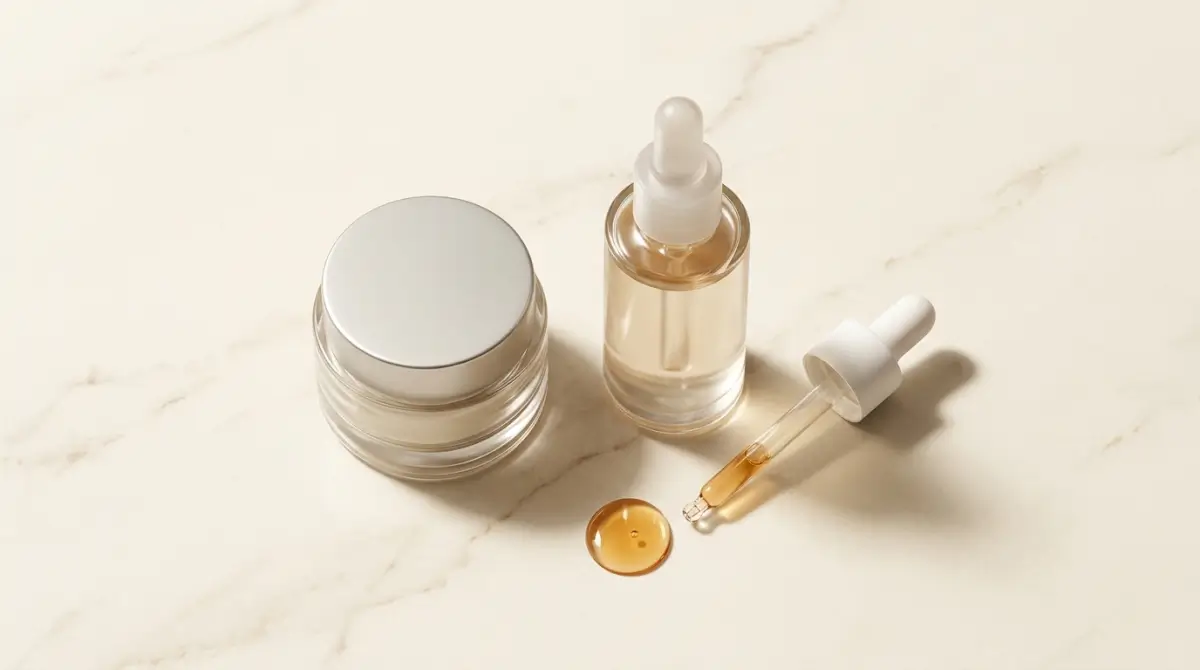
Your serum is doing the heavy lifting in your skincare routine. Get that one product right and everything else — moisturizer, SPF, the lot — works better.
Why Vitamin C Form Actually Matters
Disclosure: This article contains an affiliate link. If you purchase through it, we may earn a small commission at no extra cost to you.
L-ascorbic acid is the form most backed by research — it’s the active version your skin can use straight away, without any conversion. The catch is it’s genuinely temperamental. Exposed to light and air, it degrades quickly, which means a serum sitting under bright shop lighting may have already lost potency before it reaches you. If you go this route, look for opaque, airtight packaging — an airless pump bottle is ideal. It also tends to have a lower pH (around 3.5) to work effectively, which can sting if your skin leans sensitive. It’s the better fit for resilient skin already used to active ingredients.
Vitamin C derivatives — sodium ascorbyl phosphate, magnesium ascorbyl phosphate, and similar — are modified versions designed to be gentler and more stable in the bottle. They do need to convert to L-ascorbic acid on your skin before they can work, so they’re marginally less potent, but in everyday use the gap is smaller than brands often imply. For sensitive or reactive skin, a derivative at 10–12% concentration often delivers better real-world results than a pure L-ascorbic acid serum you avoid using because it stings.
Whatever form you choose, 15% is widely cited as the effective concentration threshold — check the label, and if the percentage isn’t listed, that’s worth noting.
How to Apply It So It Actually Works
Apply your serum to clean, slightly damp skin — within about a minute of cleansing. That residual moisture helps actives absorb rather than evaporate. You need far less product than you think: two to three drops covers your face and neck. Warm it briefly between your fingertips, then press it into your skin with your palms rather than rubbing. Rubbing disrupts the skin barrier; pressing lets the serum sink in.
Layering order matters too. Go lightest to richest: cleanser, then serum, then moisturizer, then SPF in the morning or a facial oil at night. Wait about thirty seconds between each step — enough time for one layer to absorb before you add the next. If you use more than one serum, the most water-based one goes on first.
One practical note on vitamin C specifically: most formulations are best used within three months of opening. Buy a size you’ll genuinely finish in that window.
Matching Your Serum to Your Skin Type
Hyaluronic acid is the most flexible choice — it works across all skin types because it attracts and holds moisture rather than adding oil or actives. Look for a formula with 1–2% concentration and multiple molecular weights, which means hydration reaches deeper layers rather than sitting on the surface. Always apply to damp skin so it has moisture to draw in.
For combination or oily skin with brightening goals, a vitamin C derivative at a lower concentration tends to sit better than a heavy, pure L-ascorbic acid formula. For dry or barrier-compromised skin, pairing a hydrating serum with a vitamin C formula — used on alternate mornings — is gentler than layering both at once.
If you want a set that takes the guesswork out of it, the Get Luminous & Lifted Skincare Set from eCosmetics is worth a look. It’s a curated set designed around brightening and firming — useful if you want complementary products that work together rather than building a routine from scratch. It suits those with normal to dry skin looking to address dullness and early signs of ageing. Not ideal if your primary concern is acne or very oily skin, where you’d be better served with targeted single-ingredient serums.
The realistic timeline for results with any serum is four to six weeks of consistent, daily use. One product, used correctly and regularly, will do more for your skin than a shelf full of things you rotate through without commitment.
Frequently Asked Questions
How long does a vitamin C serum stay effective once opened?
Most vitamin C serums — particularly those using L-ascorbic acid — are best used within three months of opening. After that, oxidation reduces potency, and you may notice the formula turning yellow or orange. Keeping it away from light and heat slows this down, but it won’t stop it entirely.
Is the Get Luminous & Lifted Skincare Set suitable for sensitive skin?
It’s best suited to normal to dry skin types focused on brightening and firming. If your skin is particularly reactive or prone to redness, start with a patch test and introduce one product at a time rather than using the full set at once.
Can you use a vitamin C serum and hyaluronic acid at the same time?
Yes — they layer well together. Apply the vitamin C serum first on clean skin, wait thirty seconds, then follow with your hyaluronic acid product on slightly damp skin. The two don’t conflict, and the hydration from hyaluronic acid can actually help offset any dryness that some vitamin C formulas cause.
How We Research
Every recommendation on Styled & Cozy Spaces is based on ingredient analysis, retail pricing across major stockists and independent customer reviews. We do not accept payment for recommendations. When we include affiliate links, the commission does not influence which products we select.
This article was created with AI assistance.